01 · PHYSIOLOGY
Model the crop’s development
Follow plant development and fruit production through the growing cycle. Adapt model parameters to the plant species and production system using the physiological structure of the model.
PLANTAR · GREENHOUSE HORTICULTURE
Tomato digital twin
Simulate greenhouse crop production with physiologically realistic models of plant development, environmental response, and water and nutrient availability. The tomato digital twin is the example shown here.
A science-based crop simulation and AI optimization platform for agricultural production.
Pepper is an additional greenhouse application area. Crop-specific model availability, adaptation, and validation should be confirmed with the ALAIVE team.
Request a Simulation for Your Farm →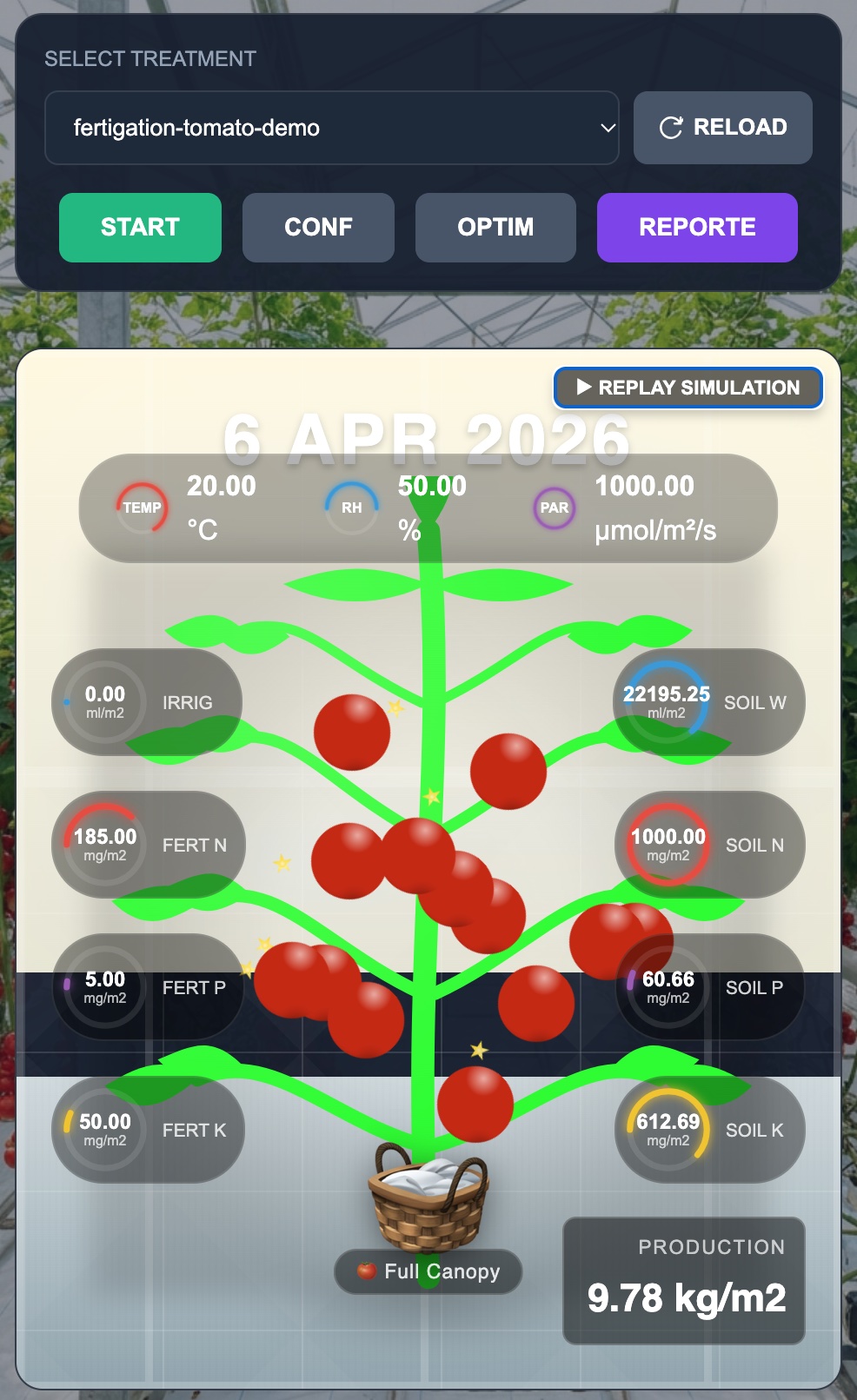
01 · PHYSIOLOGY
Follow plant development and fruit production through the growing cycle. Adapt model parameters to the plant species and production system using the physiological structure of the model.
02 · COUPLED PLANT–SOIL DYNAMICS
Represent soil or substrate characteristics, starting water and N/P/K availability, and the environmental conditions relevant to your production system. Crop demand and nutrient uptake interact with soil water and nutrient dynamics.
03 · PREDICTION & OPTIMIZATION
Evaluate irrigation and nutrient application schedules throughout the growing cycle. Explore alternative fertigation strategies and their predicted production under greenhouse conditions and resource constraints.
PLANTAR brings farm-specific configuration, animated crop development, production plots, fertigation plans, and simulation reports together. The screenshot above is a still app preview; this webpage does not run a live model or optimizer.
Explore the fixed illustrative examples to compare irrigation and NPK allocation with production outcomes. Their hypothetical values are not measured field results or validated PLANTAR predictions. Potential gains depend on crop and field conditions.